BISONG SIMON TV™ · The African Harvard for Growth and Transformation
The Raw Truth on African Education: Every Big Question, Answered
Rooted in Africa, built for the world. Who, what, when, where and how, with a clear next step for every question.
Get the answersAsk the AI Tutor 24/7Introduction: Who Is Speaking, and Why
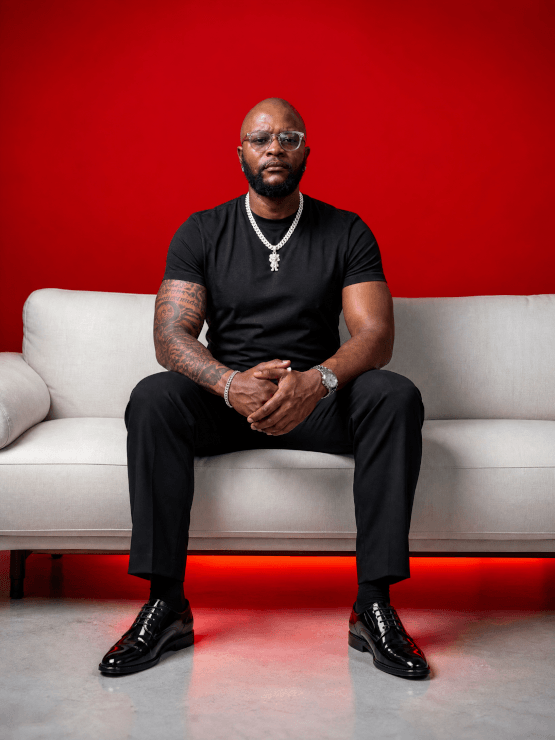
Who: Bisong Simon Egoh, founder of BISONG SIMON TV™, a Pan-African digital education, publishing and transformation institution founded in Cameroon and serving learners in Africa, the UK, Spain and North America. What: straight answers to the questions people search most about education in Africa, each tied to a practical solution. When: now, since learning compounds with every day you start. Where: on this page, on our website, and with our AI Tutor wherever you are. How: question, raw truth, exercise, action step, link.
Our framework, the Bisong Blueprint™, joins mindset, leadership and wealth creation, because a certificate without those three leaves talent stuck.
Résumé : L’éducation africaine progresse quand le savoir devient compétence, confiance et revenu. BISONG SIMON TV™ propose des cours pratiques, des romans et un tuteur IA disponible 24h/24.
The Questions and the Raw Truth
1. What are the major education issues in Africa?
Access, quality, relevance and funding gaps. Many systems still reward memorising over thinking, building and earning. Who: learners, parents, teachers. What: relevance gap. When: from primary school onward. Where: varies by country and region. How: add practical, income-linked learning beside formal schooling.
2. What is the biggest problem facing education?
Too many people finish learning without a bridge from knowledge to income. Pain becomes purpose only when knowledge becomes a service someone pays for. How: pick one skill, build one offer, serve one person this week.
3. Why is there a lack of education in parts of Africa?
Reasons differ: cost, distance, teacher shortages, conflict and weak infrastructure. Mobile-first, low-cost digital learning removes some of these walls, and a 24/7 AI Tutor answers questions when no teacher is nearby. Where: any phone with a connection.
4. What are the traditional methods of African education?
Storytelling, proverbs, apprenticeship, elders as teachers and community rites of passage. They teach character and identity. Our novels and legacy courses carry that method forward as structured lessons. Who: elders and families. How: story first, principle second, practice third.
5. How can the education system be improved?
Teach practical skills alongside theory, use technology, train for leadership and tie learning to income. Systems change slowly, so individuals should not wait for permission. Who: governments, schools and you. When: start today. How: self-directed modules plus mentorship.
6. Which country leads education in Africa?
Rankings change by source, year and measure (enrolment, literacy, test scores, higher education), so any single winner is misleading. A better question: which system gives you the skills you need? Compare sources, then build your own plan.
7. Why is education important in Africa?
Education raises income, health and civic strength, and it creates the leaders who build institutions. For the individual it is the most portable asset you own. Why now: a young, growing population turns skills into national power.
8. Why is so much of Africa poor, and what can I do?
Causes are historical, political and economic, and they differ by country. Individuals still build wealth through skills, savings, ownership and multiple income streams. Wealth begins as a mindset before it becomes money. How: learn, offer, earn, reinvest.
How to Build Confidence in Yourself
- Keep small promises. Do one thing daily that you said you would do.
- Collect evidence. Keep a “wins” list and read it when doubt speaks.
- Speak to one person. Teach what you learned. Teaching proves mastery.
- Choose your circle. Stay near people who build.
Watch on the Page
Novels by Bisong Simon Egoh
Each edition carries its own identifier. All are on the Amazon author page.
The A.I. Apocalypse
KindleASIN B0FGQMV7TKHardcoverB0FGV65954 · ISBN 979-8291036204PaperbackB0FGVLPBDP · ISBN 979-8291034583Mike Tyson: The Legend
KindleASIN B0FF31L23ZPaperbackB0FF3P2B3L · ISBN 979-8289153821The Power of Self-Belief
KindleB0FDVXFGSF · ISBN 979-8315818519PaperbackB0FF3MJB7V · ISBN 979-8289163387Death’s Journey
HardcoverB0FKTPPP9J · ISBN 979-8296081469PaperbackB0FKV1XZW1 · ISBN 979-8296080974Beyond Success
KindleASIN B0FDQVPBYVPaperbackB0FH5Q5JNR · ISBN 979-8291758878Success Is a Journey, Not a Destination
KindleASIN B0FH4NF58FPaperbackB0FJRML7KK · ISBN 979-829203381324/7
Instant Answers, Any Hour
Our AI Tutor answers from the philosophy and teachings of BISONG SIMON TV™. Ask about any module, the Bisong Blueprint™ or a free business idea.
Open the AI Study CenterConclusion: The Answer to Every Question
Africa’s education gap is real, and so is the opportunity inside it. Who acts? You. What do you do? Learn one practical skill and apply it. When? Today. Where? Wherever you are, on a phone or at a desk. How? Use the courses, the novels, the exercises and the AI Tutor.
Join the movement: Academy app · Hub · Main site · Leave a review
Part 2 · BISONG SIMON TV™ · The African Harvard for Growth and Transformation
The Raw Truth, Part 2: Countries, Challenges and Real Life
Part 1 answered the core education questions. Part 2 continues with the country-level, continent-wide and global questions people ask next.
Continue the answers← Part 1Introduction: Where Part 1 Stopped
Who: Bisong Simon Egoh, founder of BISONG SIMON TV™, speaking to learners from Africa, Europe and North America. What: answers 9 to 16, continuing from the eight questions in Part 1 (education issues, the biggest problem, lack of access, traditional methods, improvement, importance, poverty). When: now. Where: this page, our website and the AI Tutor. How: question, raw truth, exercise, action, link.
A note on honesty: education systems differ by country and change over time. Where a question needs current official figures, we tell you where to check rather than guess.
Résumé : La partie 2 traite des défis de l’Afrique, de l’Afrique du Sud, du Nigeria, du Kenya, de l’éducation mondiale et de la vie quotidienne, avec un plan de 7 jours pour renforcer la confiance en soi.
The Questions and the Raw Truth, Continued
9. What are the top challenges Africa faces, and what is the biggest problem today?
Common themes: jobs and skills for a very young population, infrastructure, access to finance, governance and uneven education quality. Africa is 54 countries, so no single problem fits all. The challenge you can act on first is skills. Who: youth, families, founders. When: today. How: skills, offers, income.
10. How is the education system in Africa?
It is many systems: colonial-era structures, local languages, public and private schools, and fast-growing digital learning. Strengths include a hunger to learn and growing enrolment. Gaps include resources, teacher support and practical skills. Where: varies by country, city and village. How: pair formal school with self-directed learning.
11. South Africa: biggest problem, inequality, quality, and “is the American system easier?”
Widely reported issues are inequality between well-resourced and under-resourced schools and weak foundations in reading and maths. Comparing with the American system is unfair: they differ in structure, funding, curriculum and grading, so “easier” depends on the school and the student. For current statistics, use official South African education department data. How: fix foundations first: read daily, practise numeracy, then specialise.
12. Nigeria: major problems facing education
Frequently cited: funding and capacity pressure, large classes, uneven access across regions and a gap between school and employment. Nigeria also has huge talent, creators and entrepreneurs. Skills that sell, such as writing, design, code and trade, move faster than waiting for the system. Who: students, parents, teachers.
13. Kenya: six challenges, how to improve, and the “7-4-2-3” question
Often discussed challenges: resourcing, teacher training and workload, class sizes, the transition to a new curriculum, exam pressure and inequality between regions. Kenya moved from the 8-4-4 system toward the Competency-Based Curriculum (CBC). “7-4-2-3” is not a standard name for either, so verify details with Kenya’s Ministry of Education before relying on any label. How to improve: practical skills, teacher support, digital tools and parent involvement.
14. What are the biggest education issues today, and the most important one?
Globally: access, quality, relevance to work and funding. The most important is relevance. Learning must lead to ability, income and character. Artificial intelligence is changing every job, so learn to prompt, verify and apply it. When: the shift is happening now.
15. What is life in Africa like, and is $100 a lot of money?
Life in Africa is as varied as Lagos, Nairobi, Kigali, Douala and rural villages: community, music, entrepreneurship and also real hardship. Whether $100 is “a lot” depends on the country, city, rent, food prices and household size. Judge it by local costs and income, not a single continental claim. How: turn any amount into a skill, tool or small business.
16. Which African country is best to live in, and where should Americans go?
There is no universal winner. “Best” depends on your goals: safety, cost, climate, work, language, visas and health care. Research current official travel advice, visa rules and local costs, and visit before committing. For learners abroad, our flags above show a global audience: Cameroon, the United States, Canada, Spain and the EU. Where: choose by purpose, not hype.
Your 7-Day Confidence Plan
| Day | Action | Reflection |
|---|---|---|
| 1 | Write your goal in one sentence | Why does it matter? |
| 2 | Study one module for 30 minutes | What was new? |
| 3 | Teach one lesson to one person | What did you explain best? |
| 4 | Ask the AI Tutor three questions | Which answer helped most? |
| 5 | Do one frightening task | What happened, really? |
| 6 | Make your first offer or post | What response did you get? |
| 7 | Review the week and set next week’s goal | Who have you become? |
Watch on the Page
More Novels and Books
Each edition has its own identifier. Part 1 lists six other titles. Browse everything on the Amazon author page.
The Night Worker
KindleASIN B0FKZNB1T3Prompting the Future
KindleASIN B0FHQQG1SJHow Do I Love You
KindleASIN B0FJQS5N7ZThe Accidental Adventurer
KindleASIN B0DZ2QZRS1PrintB0DZFRTWV4 · ISBN 979-8312628029B0FHQ9XWR9 · ISBN 979-8312622270Alternative Endings
KindleASIN B0FH77BLSRMike Tyson: The Legend
PrintB0FGTJD97F · ISBN 979-828915963224/7
Still Have a Question? Ask Now.
Our AI Tutor answers from the philosophy and teachings of BISONG SIMON TV™, any hour, any day.
Open the AI Study CenterConclusion: From Questions to Action
Across Parts 1 and 2 the pattern is the same. Who changes your life? You. What do you need? A practical skill, steady confidence and a community. When? Today. Where? Wherever you stand. How? One module, one exercise, one action at a time, with the AI Tutor beside you.
Part 1 · Academy app · Hub · Main site · Leave a review